Subject: Cuban society, satire and everyday life
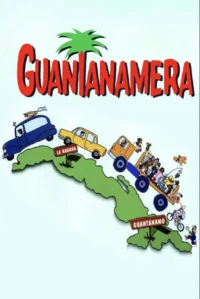
Guantanamera is a Cuban film that uses satire and road-movie elements to portray the contradictions of everyday life in Cuba during the Special Period. Through a seemingly simple journey across the island, the film exposes bureaucratic absurdities, economic shortages and moral dilemmas, while offering a sharp but empathetic reflection on Cuban society, collective resilience and social change.
Technical details
Director
Juan Carlos Tabío
Release year
1995
Running time
105 min
Country
Cuba/España/Alemania
Cast
Carlos Cruz
Mirtha Ibarra
Jorge Perugorría
Luis Alberto García
Producer
Productora Internacional ICAIC/Tornasol Films S.A./Prime Films/Road Movies Dritte Produktionen Distribuidora: UGC-D.A.
Plot
Synopsis
In Cuba during the 1990s, at the height of the Special Period, the film follows a journey across the island that brings together characters from different generations and social classes. Through this movement—linking rural and urban spaces—everyday tensions, inequalities and conflicts shaped by state bureaucracy and the pursuit of justice amid crisis come to the surface. Alea and Tabío use comedy as a critical tool to expose institutional rigidity and social hypocrisy, revealing how daily life and personal struggles are deeply intertwined with the nation’s political and cultural history.
Analysis
Discursive analysis (Spanish Version)
https://amaelespanol.com/guantanamera-analisis-discursivo/
Linguistic analysis (Spanish Version)
https://amaelespanol.com/analisis-linguistico-de-guantanamera/
Podcast (Spanish Version)
Where to watch
https://www.youtube.com/watch?v=_lfBCLKdu2w
Tags
período especial, cine cubano, feminismo, machismo, mujer cubana