Film language in Cuban cinema: identity, and gender
A space dedicated to the analysis of Cuban cinema through film language, identity, and gender representation in Cuban cinema.
This section explores Cuban films, discourses, and voices that help understand Cuba through its audiovisual culture, from the classics of the Revolution to contemporary Cuban cinema, including its most critical and plural perspectives.
Through Cuban film analysis, attention is given to women in Cuban cinema, narrative forms, and the evolution of gender representation in Cuban films.
Explore a curated catalog of Cuban films, ranging from the classics of the Revolutionary period to key works of contemporary Cuban cinema. Each film entry provides essential information along with a concise Cuban cinema analysis that addresses central themes such as identity, gender representation in Cuban cinema, film language in Cuban cinema, and cultural context. All analyses focus on Spanish-language Cuban films, examining how cinematic form and discourse articulate gender, language, and meaning within their historical and cultural contexts.
Discover in-depth discourse analysis of Cuban cinema in Spanish, focused on language, ideology, and representation.
Each text offers a critical reading of Cuban films from aesthetic, cultural, and social perspectives, examining how film language in Cuban cinema, as expressed in Spanish, constructs meaning and negotiates power, identity, and gender representation.
This section explores how women in Cuban cinema and other social subjects are articulated through narrative strategies and institutional discourses, revealing key aspects of Cuba’s contemporary reality through Spanish-language audiovisual analysis.
Explore the use of Spanish in Cuban films through a sociolinguistic and linguistic analysis of Cuban cinema in Spanish.
This section examines colloquial expressions, registers, dialectal variation, linguistic ideology, and identity construction, showing how film language in Cuban cinema, articulated in Spanish, reflects everyday speech and social dynamics.
Each analysis reveals how cinematic discourse both mirrors and transforms Cuba’s linguistic reality, contributing to a deeper understanding of contemporary Cuban cinema and its Spanish-language audiovisual practices.
A space dedicated to exploring how Cuban cinema, through Spanish-language films, reflects everyday life, popular voices, and the country’s social tensions.
In each episode, we analyze language, characters, and historical context to understand not only what Cuban films tell, but how meaning is produced through speech, silence, and audiovisual form.
Special attention is given to women in Cuban cinema and to the relationship between voice, culture, and social experience in Cuba, highlighting the expressive power of spoken Spanish in film.
Get a concise analytical overview of the main themes explored in films
Access a concise analytical overview of the main thematic and critical approaches in Cuban cinema.
The Cuban Cinema
Language, identity, and gender on screen
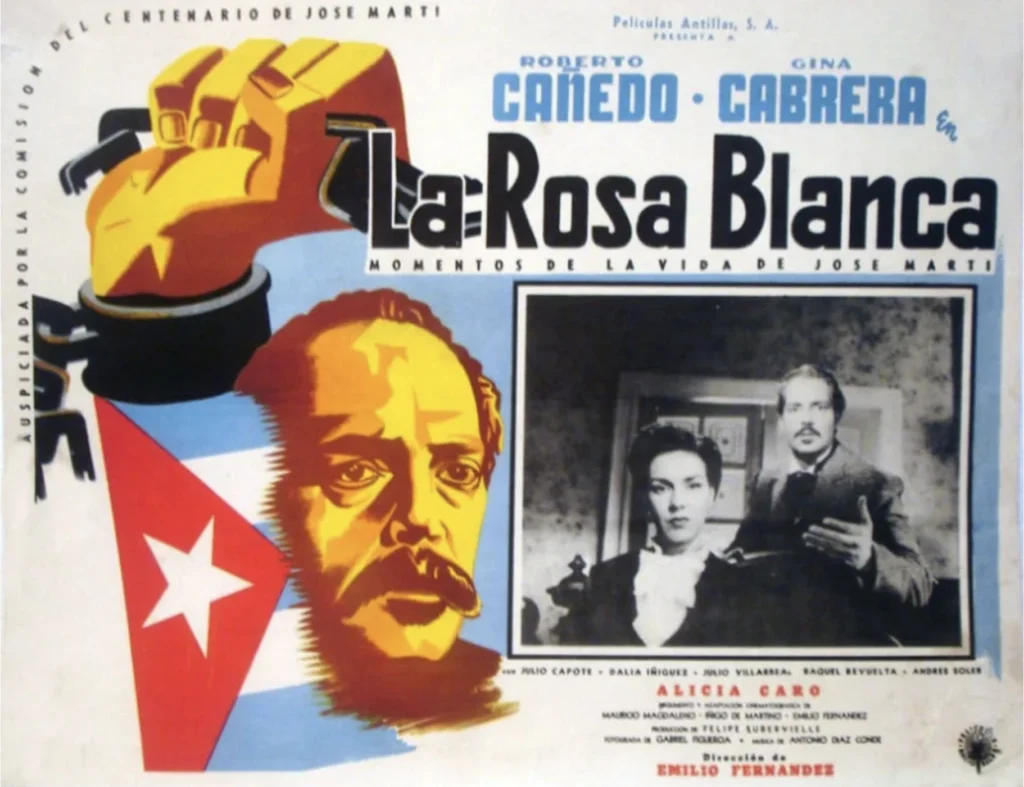
Cuban cinema has been, since its origins at the end of the 19th century and the beginning of the 20th, a complex mirror of the nation: a space where history, politics, language, and everyday life converge. From the first film screenings in Havana to the consolidation of film studios in the 1940s, cinema became a key vehicle for telling local stories and reflecting Cuba’s social and cultural transformations. More than an industry, Cuban cinema functions as a cultural language that has accompanied the country’s historical changes, from the 1959 Revolution and the creation of the ICAIC to the emergence of new generations of filmmakers seeking to portray contemporary Cuban cinema from more plural and critical perspectives.
Across different periods, ways of speaking, naming, looking, and representing bodies and social relationships have reflected an identity constantly under construction. Gender representation in Cuban cinema, linguistic codes, and the treatment of political and cultural themes reveal how cinema not only documents reality but also actively participates in the symbolic construction of the nation. Each film—whether a classic of the Revolutionary period or a recent independent production—becomes a testimony to how Spanish-language Cuban films have interpreted, questioned, and reconfigured national identity, making film language in Cuban cinema an essential tool for understanding Cuba’s history, culture, and social imagination.
The People’s Language on Screen
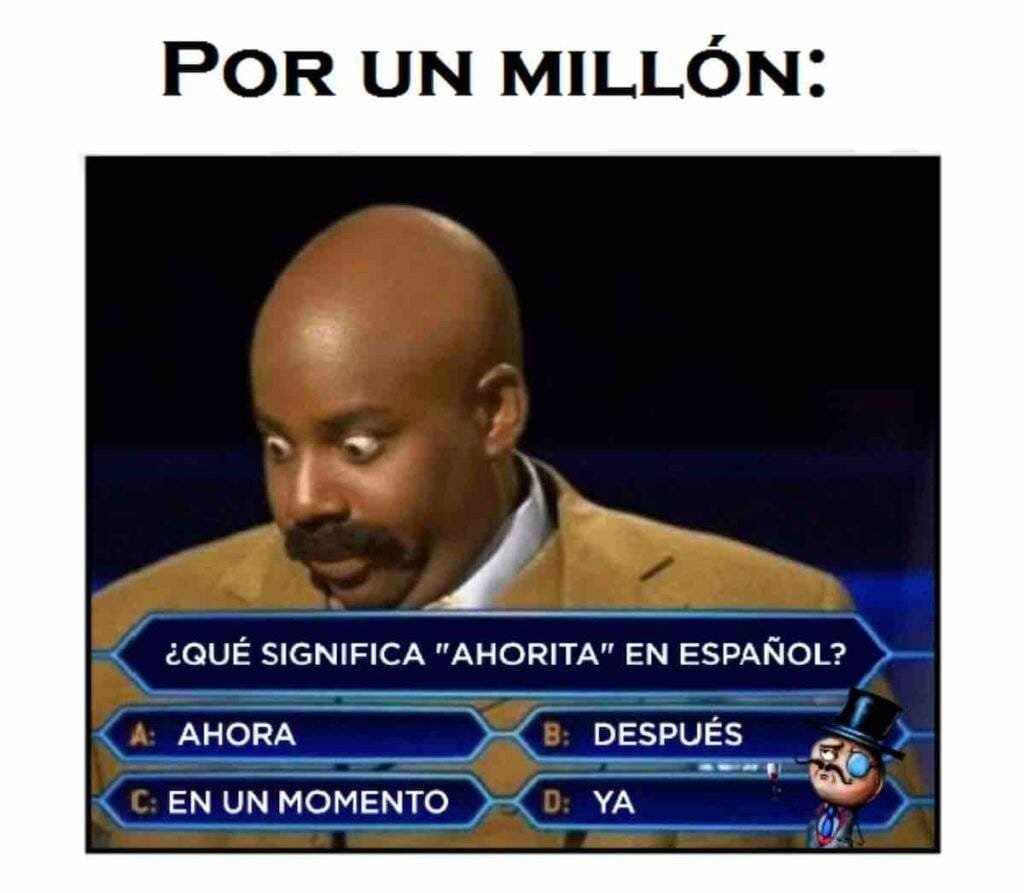
One of the most distinctive features of Cuban cinema is its relationship with language. Cuban films do not simply speak Spanish; they speak Cuban, with all that this entails. Rhythm, popular turns of phrase, humor, and the musicality of everyday speech become markers of authenticity. From films by Tomás Gutiérrez Alea, such as Memorias del subdesarrollo (1968), to documentaries produced by the International School of Film and Television of San Antonio de los Baños, language functions as a territory where relationships are negotiated and social and political tensions are expressed—between power and the people, between official discourse and the voice of the ordinary citizen.
Cuban film language has also maintained an ongoing dialogue with its political context. For decades, cinema served as a pedagogical and revolutionary vehicle, in which words, images, and silences were charged with ideology. Over time, however, new narrative forms emerged, moving away from epic tones to explore the intimate, the marginal, and the emotional. In this transition, visual language became more poetic and fragmented, incorporating metaphors, irony, and silences that are themselves an integral part of Cuban speech.
Listen to Cuban Cinema
(Content in Spanish)
Podcast episodes where we analyze how characters speak, what they say, and the silences they construct.
Women, Bodies, and Resistance
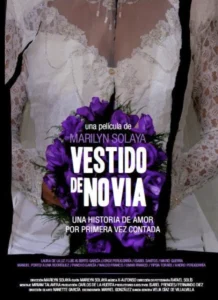
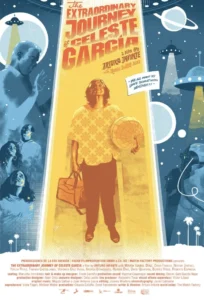
In recent years, gender issues have taken on a central role in Cuban cinema. While in its early stages women often appeared as secondary or symbolic figures—mothers, wives, allegories of the nation—today they emerge as narrative subjects who think, desire, and act. Films such as Vestido de novia (Marilyn Solaya, 2014) and El viaje extraordinario de Celeste García (Arturo Infante, 2018) address femininity and identity from diverse perspectives: the trans woman, the mature woman, the dreamer, and the woman exhausted by patriarchal structures.
These works expand female representation while simultaneously transforming film language in contemporary Cuban cinema. The camera no longer looks at women, but with them: it shares their point of view, their contradictions, and their silences. Sensuality—so present in Cuban cultural tradition—ceases to be an imposed attribute and becomes an expression of freedom and resistance. In this way, contemporary Cuban cinema has become a space of intergenerational dialogue, where the female body is resignified as a political and symbolic territory.
Discourse Analysis of Cuban Cinema
(Content in Spanish)
Critical readings of Cuban cinema that explore how films construct discourses around identity, power, gender representation in Cuban cinema, and nation. This approach places the audiovisual text in dialogue with its historical, social, and cultural context, examining how film language in Cuban cinema articulates meaning and negotiates ideological positions within Cuban society.
New Voices and Diversity
New generations of filmmakers have taken this process further. In short films, animation, and independent documentaries, previously silenced issues become visible: domestic violence, sexual dissidence, migration, and economic inequality. These narratives open Cuban cinema to a broader spectrum of identities and lived experiences. This expansion is also evident in language, as filmmakers blend documentary and fictional registers, incorporate popular humor and digital orality, and experiment with local accents and slang.
The result is a cinema that speaks from plurality, recognizing itself through linguistic and emotional diversity. In this new phase of contemporary Cuban cinema, language—whether spoken or visual—returns to the center of Cuban expression: a tool to narrate desire, disenchantment, and hope, but also to imagine the future of the island.
Beyond cinematic genres, Cuban cinema continues to function as a form of conversation with reality. Through film language in Cuban cinema and gendered perspectives, it keeps questioning history, giving voice to those who were previously unheard, and reaffirming the power of popular art as a space of resistance and collective creation.

Linguistic Analysis of Cuban Cinema
(Content in Spanish)
A journey through the use of Spanish in Cuban cinema, focusing on colloquial registers, dialectal variation, orality, silences, and ways of speaking that reveal identities, social tensions, and cultural transformations. This section explores how film language in Cuban cinema reflects everyday speech while shaping narrative meaning and social representation within contemporary Cuban cinema.
A Project to Understand Contemporary Cuban Cinema
The aim of this project is to examine the evolution of Cuban cinema throughout its history, exploring how language, gender representation in Cuban cinema, and forms of social representation have changed across different periods. We are interested in understanding how Cuban cinema has engaged in dialogue with the country’s political and cultural processes and how, through its visual and narrative language, it has contributed to shaping the transformations of Cuban society.
As part of this research, we seek to develop an analytical database of contemporary Cuban cinema that allows for a systematic study of the main thematic, aesthetic, and discursive trends in recent film productions. Ultimately, this project aims to preserve Cuba’s film memory and to open new perspectives for rethinking Cuban identity through image, language, and collective experience.
You are therefore invited to explore this analytical repository of contemporary Cuban cinema, a project that systematizes the aesthetic, linguistic, and social transformations of Cuban film. This platform is conceived as an open invitation to study and dialogue around Cuba’s audiovisual memory.
Join me on this journey through Cuban cinema. If you are interested in learning Spanish through film language in Cuban cinema or collaborating in this research project, do not miss the opportunity.
🎓 Classes on Cuban Cinema and Spanish Language
Learn Spanish through Cuban cinema and explore Cuban culture through guided film analysis focused on film language in Cuban cinema, identity, and gender representation.
🗣️ Collaborate or Research Cuban Cinema
Academic exchange, research, teaching, and cultural projects focused on contemporary Cuban cinema, discourse analysis, and gender representation in Cuban cinema.